

1. Skill Types
You can see the skill type and skill description by hovering into the skill pill.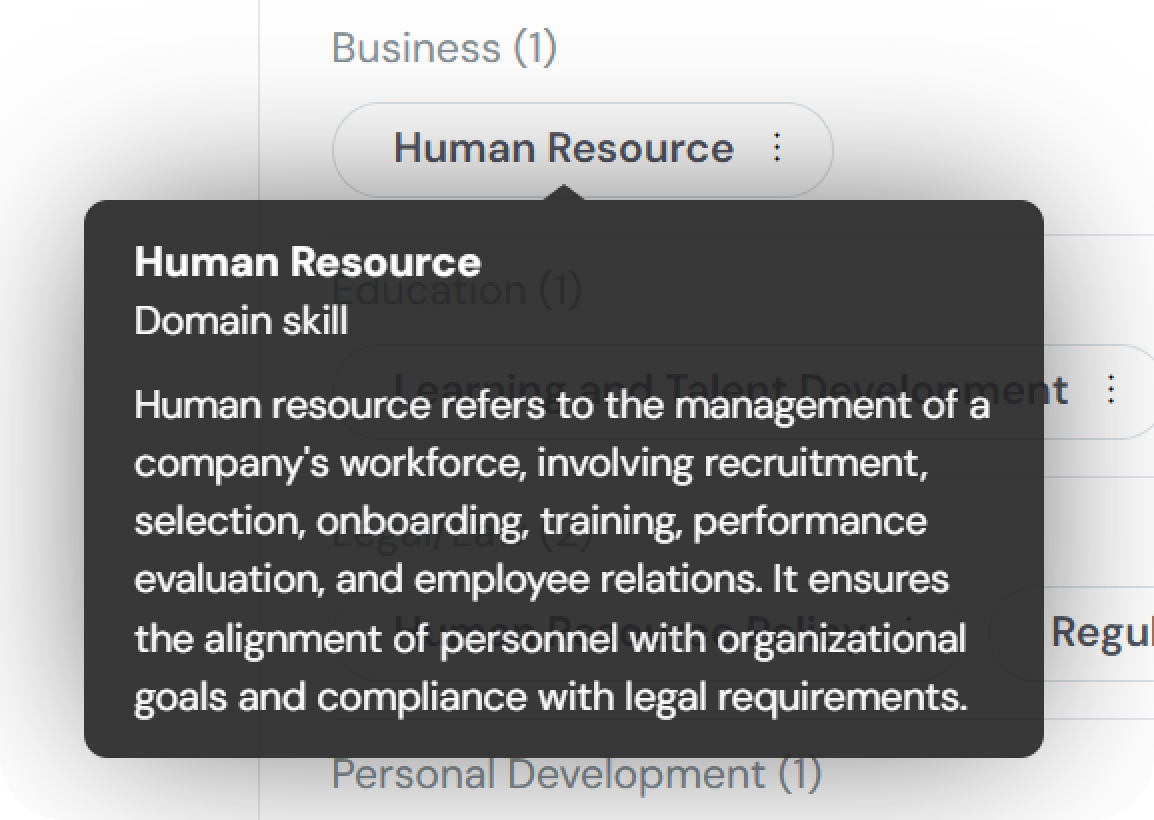
- Domain Skill: Industry-specific knowledge and specialized expertise required for a particular field (e.g., Regulatory Compliance or HR Policy).
- Hard Skill: Technical abilities or specific sets of knowledge acquired through education and training (e.g., Python, Data Analytics, or Payroll).
- Soft Skill: Interpersonal and professional attributes that determine how you work and interact with others (e.g., Negotiation, Leadership, or Teamwork).
- Other Skill: General competencies that provide additional value to your professional profile but fall outside technical or domain-specific categories.
2. Core vs. Non-Core Skills
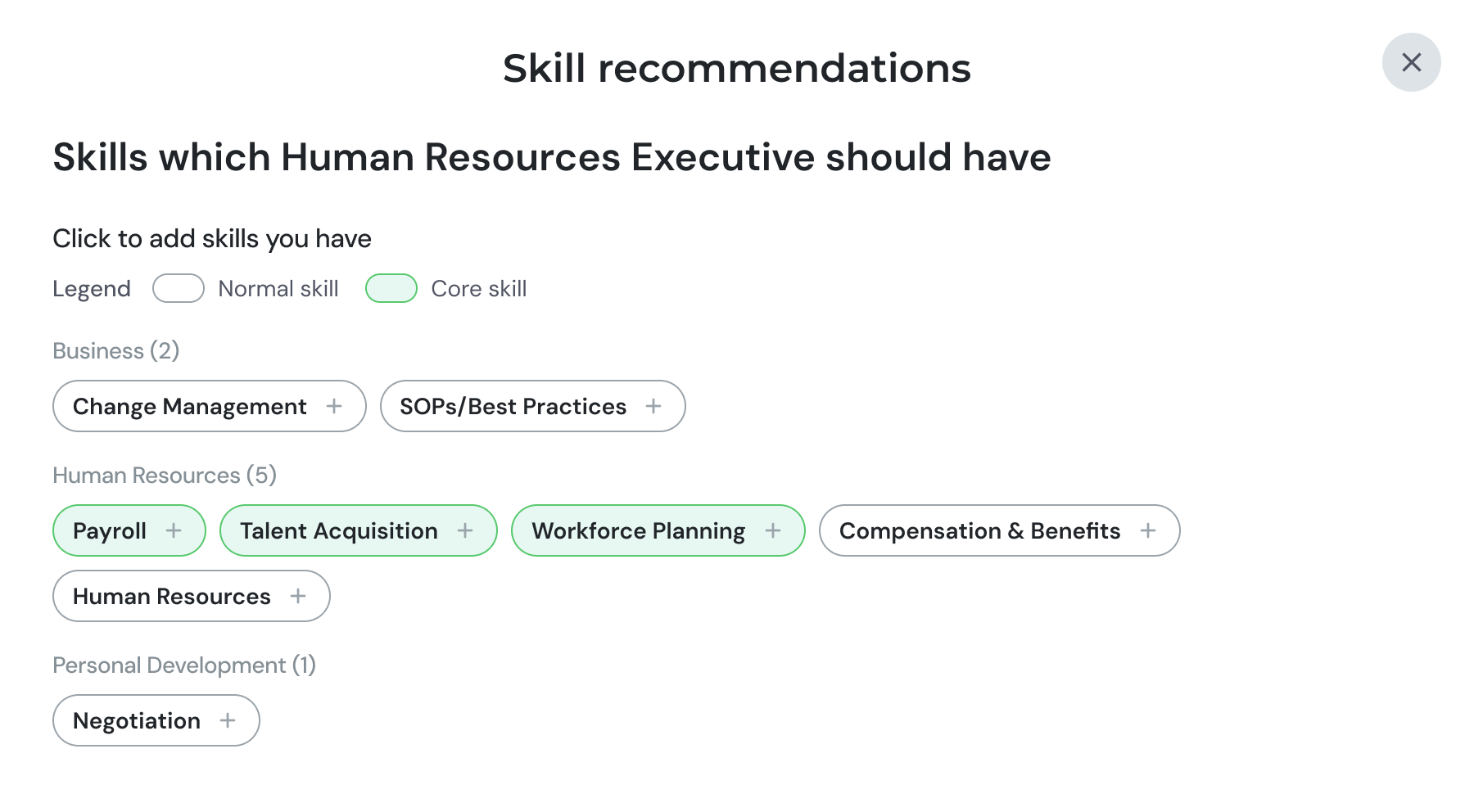
- Core Skill: Mandatory competencies defined by your organization’s job architecture as essential for a role. These are the primary drivers of your Match Score.
- Non-Core Skill: Supporting skills that are beneficial to have but are not strictly required for the successful performance of a job role.
3. Skill Sources
Skills are populated into your profile from various verified and professional sources:- Careers & Skills Passport (CSP): Verified skills and certifications retrieved directly through your Singpass connection, representing government-recognized credentials.
- Job Transformation Map (JTM): Strategic skills derived from industry-standard frameworks that identify the future-ready competencies needed as job roles evolve.
4. Proficiency Levels
Your level of mastery for any given skill is measured on a 6-tier scale. Accurate self-rating ensures your Match Score remains precise: | I have not rated my skill proficiency |
 | I can perform this skill with help |
 | I can perform this skill independently some of the time |
 | I can perform this skill independently most of the time |
 | I can perform this skill and provide some guidance to others |
 | I can perform this skill and provide complete guidance to others |
Why Accurate Skill Mapping Matters
- Hyper-Personalization: Your skills directly influence the recommendations you see in the Learn and Career Insights modules.
- Match Score Accuracy: The higher your proficiency in a Core Skill, the stronger your match will be for your current role or career aspirations.
- Growth Tracking: Your Skills Journal logs every change in proficiency, providing a digital timeline of your professional evolution.